
A neutral explainer on stablecoin liquidity: what it means across issuance, trading, and DeFi, how fragmentation and CCTP-style transfers reshape it, plus institutional integration, payments, risks, and outlook.
+3 sources across the wider coverage universe
 Aave V4 launches the Global Dollar Hub on Ethereum, introducing its first new Liquidity Hub designed specifically for USDG-correlated assets and stablecoin liquidity2026-07
 Checker raises $8M to give institutions one API for stablecoin liquidity and compliance2026-05
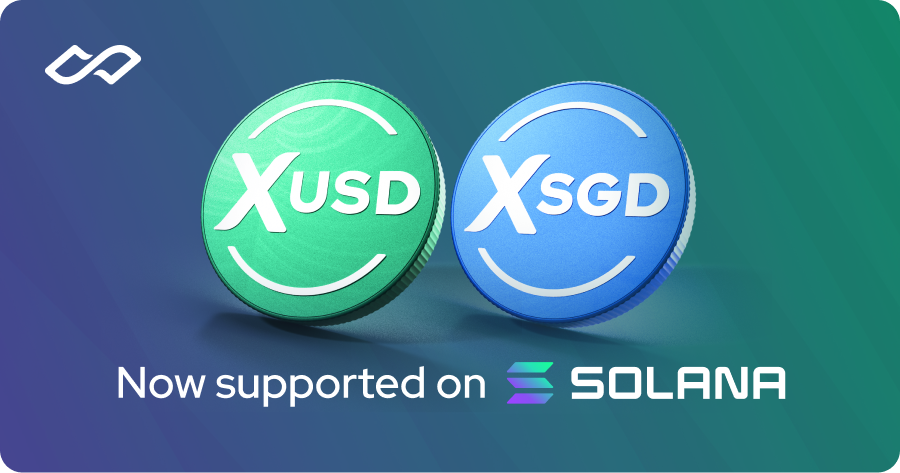 StraitsX launches XSGD and XUSD on Solana, uniting native SGD and USD stablecoin liquidity onchain2026-03
 Brazilian stock exchange B3 to launch its own tokenization platform and stablecoin. The stablecoin will facilitate tokenized asset transactions and is expected to be linked to the Brazilian real. The tokenization platform is set to allow assets to be tokenized and traded on the exchange, with Luiz Masagão ,B3’s vice president of products and clients, saying both systems will share the same liquidity pool..2025-12
 Stablecoins don’t replace banks—they route around them. Nearly all “onchain” payments still rely on fiat rails, FX liquidity, and banking buffers, meaning real speed and reliability belong to teams that control underlying fiat infrastructure.2025-12
 A new stablecoin unifying liquidity across use cases, built for scale. Coming soon on BNB Chain.2025-12
Stablecoin liquidity is the depth and availability of dollar-pegged (and other fiat-pegged) tokens that can be bought, sold, sent, or borrowed across blockchains, exchanges, and payment rails without large price slippage or settlement delay. It is one of the most closely watched health indicators in crypto because it underpins trading, lending, and the growing business of moving money onchain.
What "liquidity" means for stablecoins
In financial markets, liquidity describes how easily an asset converts to cash near its quoted price. For a stablecoin such as USDC or USDT, the relevant question is slightly different: how reliably the token holds its peg while large amounts change hands. A deeply liquid stablecoin can absorb redemptions, swaps, and transfers without the price drifting from $1.00.
Stablecoin liquidity has several distinct layers. Issuance and redemption liquidity is the issuer's ability to mint and burn tokens against reserves at par. Trading liquidity is the order-book depth on centralized exchanges and the pool depth in onchain automated market makers. Onchain liquidity refers specifically to capital sitting in decentralized-finance (DeFi) venues—decentralized exchanges, lending markets, and collateralized debt positions—where stablecoins serve as the base trading and borrowing asset. Each layer can be healthy or stressed independently, which is why "stablecoin liquidity" is best read as a stack rather than a single number.
The aggregate scale is large and growing. Total stablecoin market capitalization passed roughly $320 billion in the first half of 2026, with Tether's USDT around $185–190 billion and Circle's USDC near $78–80 billion (Bitcoin Foundation; KuCoin). Market capitalization is a proxy for liquidity, not a guarantee of it—tokens can be large but thinly traded on a given chain.

Liminal launches Prime suite for institutional OTC trading and stablecoin liquidity

The fragmentation problem
The central challenge in stablecoin liquidity today is fragmentation. As stablecoins launched across dozens of blockchains, the same nominal dollar split into many incompatible pools: native issues, bridged "wrapped" versions, and chain-specific variants that do not interoperate cleanly. Wrapped or synthetic copies create confusion about which version DeFi actually uses and scatter depth across venues, widening spreads (LI.FI).
A large share of recent newsroom activity is essentially fragmentation repair. Circle's burn-and-mint Cross-Chain Transfer Protocol (CCTP) moves native USDC 1:1 between chains without locking it in pools or minting bridged copies, which consolidates liquidity rather than splintering it further (Circle). Native USDC and CCTP going live on networks such as Starknet are framed by their teams as fixes for liquidity fragmentation and smoother institutional onboarding. Parallel efforts route stablecoins across many chains through messaging layers—for example, an initiative to make TRON-based stablecoin liquidity reachable across 150 chains via the Hyperlane interoperability protocol, and Hedera's integration of the USDT0 cross-chain standard.
New deployments follow the same logic. StraitsX bringing its XSGD and XUSD tokens to Solana, the introduction of zUSDC on Zilliqa, and USDCx going live on Cardano (backed 1:1 by USDC held in reserve) all aim to deepen dollar-denominated liquidity on chains that previously lacked it. The common thread: liquidity is only useful where users and applications actually transact, so issuers and ecosystems keep extending reach while trying not to dilute depth.
Readers aren't clicking stablecoin liquidity stories for yield mechanics — they're tracking systemic fragility: Tether's un-audited 75% market dominance and DeFi protocols' reactive governance cuts reveal a shared reader fear that the liquidity underpinning the entire crypto market rests on unverifiable reserves and reflexive AMM mechanics that can self-amplify in either direction.
Onchain liquidity and DeFi
Within DeFi, stablecoins are the default unit of account. They form one side of most trading pairs, the dominant supplied asset in lending markets, and the borrowing currency of choice. The structure of those markets is being redesigned after stress in the 2025 downturn exposed weaknesses in overcollateralized lending and thin real-world utility. Several observers describe a transition into a "Gen 2" of DeFi lending oriented toward compliant stablecoins, cross-chain liquidity, and more capital-efficient credit.
Protocol architecture reflects that shift. Aave's v4 design framework, for instance, separates pooled "Core Spokes," dedicated bluechip stablecoin markets, and isolated hubs so that liquidity for high-quality assets can be deep without contaminating riskier markets—an attempt to balance capital efficiency against risk isolation. Other projects target liquidity directly: PayPal's PYUSD tapped the Spark protocol to add roughly $1 billion in borrowing and lending depth, drawing on a multibillion-dollar stablecoin reserve pool to grow adoption without expensive incentive programs. On the issuance side, collateralized-debt-position (CDP) designs such as Enosys on the Flare network let holders of other assets mint a stablecoin and bootstrap its liquidity through stability pools and decentralized-exchange (DEX) incentives.
The throughline is that onchain liquidity is increasingly engineered rather than merely subsidized. Where the previous cycle paid for liquidity with token emissions, newer designs try to source it from real reserves, structured markets, and reusable collateral.

Stabilizer partners with Arbitrum to bring zero-slippage stablecoin swaps to Arbitrum One, home to more than $3.5B in stablecoin liquidity
Institutional and TradFi integration
The most consequential recent development is institutional money treating stablecoins as plumbing for traditional finance. Several stories point the same direction.
Infrastructure providers are packaging liquidity and compliance together: Checker raised $8 million to give institutions a single API spanning stablecoin liquidity and regulatory controls, and Polygon Labs unveiled an "Open Money Stack" combining liquidity, orchestration, and regulatory tooling for borderless stablecoin payments. Circle deepened its USDC partnership with the exchange Bybit across trading, payments, and liquidity as the token approached record supply.
Tokenized real-world assets are converging with stablecoins. BlackRock's tokenized money-market fund BUIDL was accepted as eligible collateral within the M0 stablecoin framework, letting issuers back tokens with a yield-bearing institutional instrument. Grove's "Basin" product aims to give tokenized-treasury investors instant stablecoin liquidity for redemptions, and Uniform Labs launched "Multiliquid" to enable instant swaps between tokenized money-market funds and stablecoins—explicitly pitched at a multibillion-dollar tokenization liquidity gap. Membrane settled what was billed as the first institutional stablecoin-for-stablecoin repo on a public blockchain, with one native stablecoin (USX) as the asset leg and USDC as the cash leg, importing a familiar TradFi funding tool onto public rails.
Exchanges and national market operators are joining. Brazil's B3 plans a tokenization platform and a real-pegged stablecoin sharing a single liquidity pool, and Coinbase's broader pivot toward an "everything exchange" is partly a bet that B2B stablecoins will pull TradFi liquidity onchain. Integral's PrimeOne launched a stablecoin-powered prime brokerage with named liquidity providers, applying credit and net-settlement concepts from institutional trading to crypto.
This integration brings new systemic considerations. The Bank for International Settlements warned that tokenized money-market funds are rapidly linking DeFi with traditional finance, offering yield and regulatory protection but introducing risks around liquidity mismatches, concentrated holders, and potential contagion with stablecoins. In other words, deeper liquidity and tighter coupling can transmit stress as well as capital.
- 01Tether opacity and dominance risk
75%+ market share without third-party audits maps directly onto FTX-style contagion anxiety, making Tether's unverified reserve sheet the highest-stakes open question in crypto liquidity.
- 02DeFi governance under peg stress
GHO's liquidity committee repeg plan and AaveDAO slashing stablecoin borrowing power in response to the UNI Compound crunch show readers tracking real-time protocol crisis responses.
- 03AMM reflexivity and liquidation cascades
Uniswap V3 concentrated-liquidity positions that flip fully to one asset when out of range create a self-amplifying sell spiral — a structural risk embedded in DeFi's core price-discovery layer.
- 04TradFi and institutional stablecoin rails
B3, Ripple RLUSD, BitGo USDS, and the first institutional on-chain stablecoin repo signal that legacy finance is building parallel settlement infrastructure, raising who-controls-liquidity questions.
- 05Regulatory compliance as liquidity moat
EU-driven USDT delistings and a16z naming sovereign policy conflicts as a top stablecoin challenge show readers watching compliance as the structural divide that will determine the next market-share winner.
- 06Cross-chain liquidity aggregation
Spark's $1.5B Aave deployment, River's chain-abstraction system, and the stablecoin payments value-chain thread reveal readers mapping where liquidity actually concentrates across fragmented ecosystems.
Stablecoin payments and the fiat backbone
A growing use case—and a sober reality check—is payments. Stablecoins are increasingly used to move value across borders, but onchain settlement still leans heavily on traditional finance. As one commentary in our coverage put it, stablecoins largely route around banks rather than replace them: most "onchain" payments still depend on fiat on/off-ramps, foreign-exchange liquidity, and banking buffers. Real-world speed and reliability therefore accrue to teams that control the underlying fiat infrastructure, not just the token.
That is why payment-focused stacks bundle liquidity with orchestration and compliance, and why issuers keep expanding the venues where a stablecoin can be received and redeemed. For payments, liquidity is less about trading depth and more about the certainty that a recipient can convert tokens to usable money quickly and at par.
Aave V4 launches the Global Dollar Hub on Ethereum, introducing its first new Liquidity Hub designed specifically for USDG-correlated assets and stablecoin liquidity
How liquidity is measured and what can go wrong
Useful liquidity metrics include aggregate and per-chain market capitalization, DEX pool depth and trading volume, centralized-exchange order-book depth, lending-market utilization, and the bid-ask or peg deviation observed during large transactions. No single figure is sufficient; a token can be enormous overall yet illiquid on a specific chain or venue.
The principal risks are familiar. Peg stress occurs when redemptions outrun the issuer's ability to honor par, or when secondary-market depth thins during volatility. Concentration risk arises when a few holders or a single chain dominate supply. Liquidity mismatch appears where instant-redemption promises are backed by assets that settle more slowly—a concern the BIS specifically flagged for tokenized funds. Bridge and wrapping risk persists wherever non-native copies of a stablecoin circulate, since the backing and redemption path may differ from the native token. Regulatory frameworks increasingly shape these dynamics by setting reserve, disclosure, and redemption standards, pushing the market toward compliant, fully reserved designs.
- 2020-08launch
Curve Finance launches as DeFi's dedicated stablecoin AMM with StableSwap invariant
- 2023-07launch
Aave launches GHO stablecoin; liquidity committee later convenes to approve repeg plan
- 2023-08launch
PayPal launches PYUSD stablecoin; later integrates with Spark for $1B DeFi liquidity
- 2024-12regulatory
EU MiCA stablecoin rules take effect; Binance delists USDT for EU users, USDC share jumps from 0.48% to 8.26%
- 2024-12launch
Ripple unveils RLUSD globally with full USD backing and compliance-first positioning
- 2025-04milestone
Spark Liquidity Layer integrates with Aave to deploy up to $1.5B across Core, Prime, and Base markets
Outlook
Stablecoin liquidity is consolidating even as it spreads. The dominant trend is native issuance and burn-and-mint transfer protocols unifying depth across chains, while institutional rails—tokenized treasuries as collateral, onchain repo, prime brokerage, and payment stacks—pull traditional capital toward stablecoin settlement. Expect continued growth in total supply, more chains gaining native dollar liquidity, and tighter coupling between stablecoins and regulated yield-bearing instruments. The countervailing risks—liquidity mismatches, holder concentration, and contagion between DeFi and traditional finance—are now being named by mainstream institutions, which suggests the next phase will be defined less by how much stablecoin liquidity exists than by how resilient it proves under stress.
- CentralizationHigh
Tether's 75%+ market share with no third-party audit concentrates systemic liquidity risk in a single opaque balance sheet, with expert warnings likening potential failure to FTX-scale contagion.
- RegulatoryHigh
EU MiCA stablecoin enforcement driving major exchange USDT delistings and BIS warnings about tokenized MMFs creating DeFi-TradFi contagion channels signal intensifying sovereign pressure on liquidity infrastructure.
- LiquidityHigh
Uniswap V3 concentrated-liquidity reflexivity and AaveDAO's emergency stablecoin borrowing-power cuts demonstrate that on-chain liquidity can enter self-reinforcing collapse or pump without external trigger.
- Smart-contractMedium
CDP and governance-steered stablecoins like GHO require active parameter changes to restore pegs, exposing the system to misconfiguration risk precisely during high-volatility windows when response time is shortest.
- MarketMedium
Ethereum's stablecoin supply reaching $166B deepens ecosystem-wide settlement dependency, concentrating the blast radius of any major de-peg or issuer failure across the entire DeFi stack.
Latest Stablecoin Liquidity news
Liminal launches Prime suite for institutional OTC trading and stablecoin liquidityStabilizer partners with Arbitrum to bring zero-slippage stablecoin swaps to Arbitrum One, home to more than $3.5B in stablecoin liquidityAave V4 launches the Global Dollar Hub on Ethereum, introducing its first new Liquidity Hub designed specifically for USDG-correlated assets and stablecoin liquidityChecker raises $8M to give institutions one API for stablecoin liquidity and complianceStraitsX launches XSGD and XUSD on Solana, uniting native SGD and USD stablecoin liquidity onchainBrazilian stock exchange B3 to launch its own tokenization platform and stablecoin. The stablecoin will facilitate tokenized asset transactions and is expected to be linked to the Brazilian real. The tokenization platform is set to allow assets to be tokenized and traded on the exchange, with Luiz Masagão ,B3’s vice president of products and clients, saying both systems will share the same liquidity pool..Community notes
Spot something off or out of date? Drop a note. Editors review topic notes daily and roll accepted fixes into the explainer — contributors are recognized in the monthly $SQUID drop.
Loading notes…
Help improve this topic
Have a story or tip about this topic? Submit it. See something missing? Leave a note. Editors review daily; accepted submissions and fixes count toward the monthly $SQUID drop.