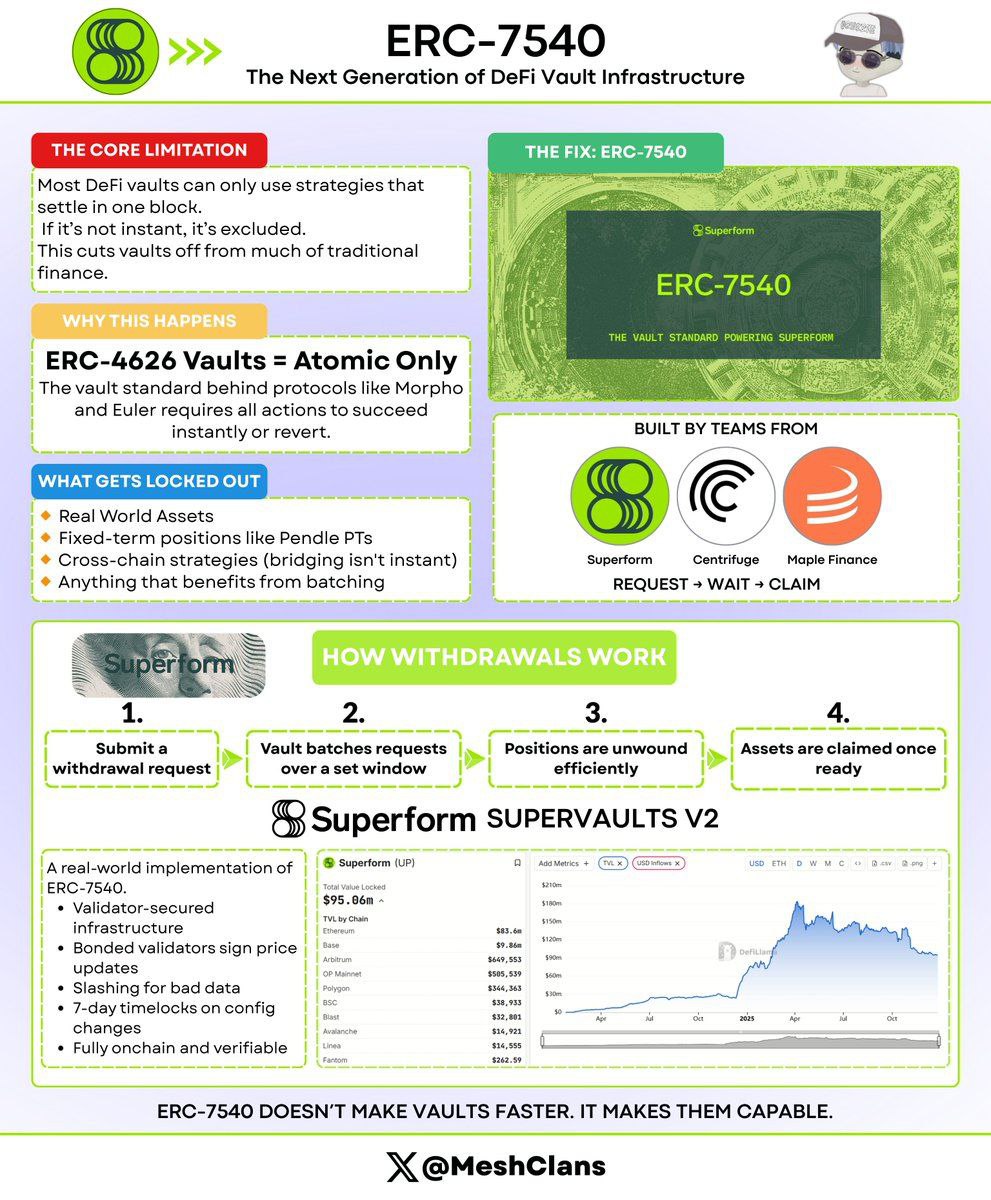
ERC‑7540 is a new Ethereum token standard that extends the widely‑used ERC‑4626 tokenized vault interface with asynchronous deposit and redemption flows, allowing vaults to handle strategies where capital cannot be processed in a single, instant transaction. Instead of a one‑transaction deposit or withdrawal, users interact with a request → wait → claim lifecycle: they submit a request, wait while the vault processes it off‑chain or over time, then later claim shares or underlying assets once the request is marked claimable.
The standard was designed to support DeFi use cases where settlement is delayed or occurs on different rails, such as real‑world asset (RWA) vaults, fixed‑term yield products, cross‑chain positions, and other non‑instant strategies. In RWA scenarios, for example, a vault cannot safely mint shares until a new net asset value (NAV) is struck or off‑chain assets settle, so ERC‑7540 splits actions into queued requests that are executed once the economic conditions are met. This architecture enables features like batching of many user requests into a single settlement transaction, which implementations and auditors describe as a key source of significant gas savings and operational efficiency for protocols handling large flows and complex strategies.
Because ERC‑7540 is built directly on top of ERC‑4626, it preserves the same core interface (deposit, mint, withdraw, redeem) for settlement while adding request and status‑tracking methods for the async layer. This compatibility means existing DeFi protocols already integrated with ERC‑4626 can often support ERC‑7540 vaults with minimal changes, while gaining better composability for RWAs, cross‑chain lending, liquid staking, and other time‑dependent yield sources. Infrastructure providers such as Centrifuge and Lagoon have begun implementing ERC‑7540‑aligned vaults for tokenized real‑world assets and other asynchronous strategies, and security firms are focusing on race conditions and queue management as core risk areas in these designs.
✨ AI-generated background, compiled from web sources — not editorial content.