◧ Every topic explained
Evergreen deep-dives on the people, protocols, tokens, and ideas behind every headline — from Bitcoin to the newest DeFi mechanism, each written to orient an operator and a newcomer alike.
Leviathan News / The Atlas
Every topic in crypto, mapped and explained — and wired to the news as it breaks.
📖 New here? Read the launch story →🏆 Atlas Leaderboard →◷ Recent Atlas updates →
Deep explainer on crypto apps: how exchange, wallet, DeFi, gaming, AI and “superapps” front-end onchain finance, balance custody and UX, rely on banks and stablecoins, and face growing security and regulatory pressures.

Explains how zero-knowledge cryptography powers privacy, compliance and scaling in crypto, covering proofs, zk-SNARK/STARK trade-offs, stablecoins, proof-of-reserves and major ecosystems like Ethereum, XRP, Solana and Polygon.
DefiLlama is DeFi's leading open-source analytics aggregator, tracking TVL, fees, stablecoins, and yields across hundreds of chains — expanding in 2026 with LlamaAI and private-market data via the Bulletin acquisition.

In‑depth explainer of DTCC’s role in Wall Street markets and its push into tokenization, Canton, Chainlink, and Stellar, outlining how DTC‑custodied securities and collateral are moving onchain and what it means for crypto and DeFi.
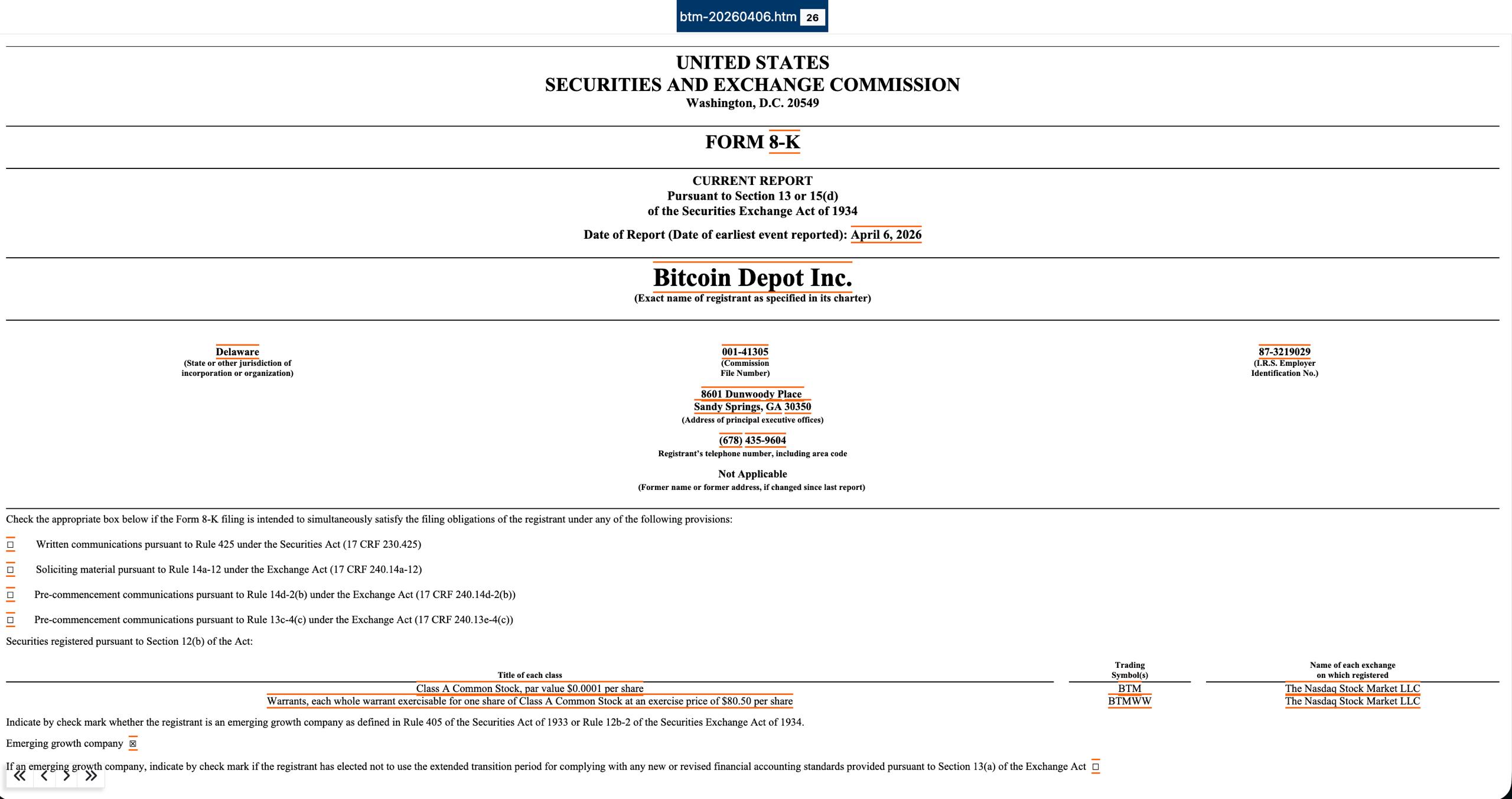
Bitcoin is a decentralized digital asset capped at 21 million coins, now held by ETFs, corporations like Strategy, and sovereign states — navigating record ETF outflows, rising on-chain activity, and growing institutional infrastructure in 2026.
Deep dive explainer on crypto wallets: how keys, custody and wallet types work; DeFi and tokenized asset use; security risks from malware and approvals; and how MPC, account abstraction and AI‑ready wallet infrastructure are reshaping Web3.

In-depth explainer on AI agents in crypto: how autonomous software gets wallets, onchain identity and payment rails; key use cases in trading, travel and commerce; plus security, compliance and infrastructure shaping the agentic economy.

Arc is Circle’s stablecoin‑native L1 built around USDC gas, fast finality, built‑in FX, and post‑quantum security, backed by a $222M ARC token raise and early partners like Aave, Aerodrome, and Visa as it targets institutional onchain payments and capital markets.
Territories that route into Smart Contract. Search within this inbound mesh or clear the filter to return to the full map.
31 territories · page 1 of 2 · clear inbound routeDon't see your protocol? Request a map →
Crypto fees span network gas costs, protocol revenue, DEX trading charges, and bridge tolls. This guide explains how each type works, how they're evolving, and why fee generation is becoming the key metric for evaluating blockchain sustainability.
In-depth explainer on crypto vaults, covering how smart-contract vaults work, ERC‑4626/7540 standards, yield and stablecoin vaults, RWA and institutional products, security incidents, and what users should weigh when chasing onchain yields.
Comprehensive explainer on the Ethereum Virtual Machine (EVM), covering how it works, why it became the smart contract standard, its multichain expansion, zkEVMs, account abstraction, privacy, DeFi use, and key trade-offs shaping its future.
A comprehensive guide to crypto security covering smart contract exploits, phishing risks, AI-assisted audits, Ethereum's security floor thesis, quantum threats, and protocol upgrade practices for blockchain builders and investors.
ETH is Ethereum's native token, serving as gas, staking collateral, and DeFi base asset. This explainer covers supply mechanics, staking yield, ETF developments, whale activity, and long-term outlook.
Yearn is a DeFi yield aggregator that automates capital allocation across lending and liquidity protocols through smart contract Vaults. Since creating the first DeFi Vault in 2020, it has grown into one of DeFi's most battle-tested yield infrastructures, with over $8B in deposits and more than $300M in net profits.
Comprehensive explainer on audits in crypto, covering smart contract security, proof of reserves, compliance, formal verification, and AI tools, with guidance for users and builders on interpreting and integrating audits across the ecosystem.
Deep explainer on what “liquidated” means in crypto, covering margin and DeFi mechanics, BTC/ETH futures, liquidation cascades, Coinglass data, Hyperliquid, and practical ways traders can manage risk and avoid forced closures.
Crypto bounties reward task completion across bug hunting, fund recovery, and ecosystem building — this explainer covers how each type works, how to evaluate programs, and where the model breaks down.
Polygon is an Ethereum-aligned blockchain network and payment infrastructure layer, offering PoS-based scaling, ZK interoperability via AggLayer, and an Open Money Stack powering stablecoin payments for Mastercard, Cash App, and global fintechs.
BNB is Binance's native token powering BNB Chain's DeFi, AI agent, and real-world asset ecosystem. With ~135M circulating supply, quarterly burns exceeding $1B, a pending US spot ETF, and a 20,000 TPS 2026 roadmap, it's a top-5 asset navigating centralization trade-offs.
Liquidity incentives are the token rewards, fee shares, and bribes DeFi protocols pay to attract capital. Learn how emissions, veCRV gauges, vote markets, and liquidation bonuses work—and why sustainability matters.
A crypto proposal is a formal change request—on-chain or regulatory—that governs how protocols, DAOs, and regulators evolve. Learn how they work, fail, and shape DeFi and Ethereum.
Comprehensive explainer on memecoins: what they are, how they launch and trade (esp. on Solana and Pump.fun), celebrity and political tokens like TRUMP, legal risks, market structure, and how these volatile assets fit alongside Bitcoin, ETH and stablecoins.
Onchain data — transactions, protocol metrics, wallet activity recorded on public blockchains — is becoming critical infrastructure for DeFi, institutional finance, AI agents, and real-world asset tokenization. Here's how it works and why it matters.
Deep explainer on how innovation works in crypto, from DeFi vaults and stablecoins to AI and prediction markets, and how SEC, CFTC, ESMA and global hubs shape where and how new blockchain ideas launch and scale.
In‑depth explainer on Berachain, an EVM‑identical Layer 1 using Proof‑of‑Liquidity to align security with DeFi liquidity, covering its architecture, tokenomics, ecosystem, performance, risks, and role in the multichain landscape.
A deep-dive explainer on blockchain transactions: how they work, how fees and MEV shape their ordering, what privacy and security risks matter, and where cross-chain coordination is heading.
Avalanche (AVAX) is a Layer-1 blockchain combining sub-second finality, EVM compatibility, and customizable L1s, increasingly adopted by institutions for tokenized assets, stablecoin payments, and regulated settlement infrastructure.
Comprehensive explainer on NFTs for crypto readers, covering how non-fungible tokens work, Ethereum and Bitcoin standards, minting and markets, DeFi integration, 2021–22 boom and crash, regulation, security risks, and long-term use cases beyond speculation.
Comprehensive explainer on Wrapped Ether (WETH), covering how it works, its role across Ethereum DeFi, Aave and NFT auctions, security and bridge risks, recent exploit case studies, and how WETH compares to BTC, staking tokens, and stablecoins.
Deep dive into Ethereum account abstraction, from ERC‑4337 smart wallets and Pectra’s EIP‑7702 to native frame transactions (EIP‑8141), explaining UX, security, stablecoin gas and multichain implications for crypto users and builders.
Crypto hacks span smart contract exploits, bridge attacks, wallet drains, and infrastructure compromise — costing billions annually. Hacked tokens drop 61% on average and rarely recover fully.
Crypto vulnerabilities span smart contract logic, cryptographic design, and bridge infrastructure — and AI is reshaping how both attackers and defenders find them, as recent Zcash and DeFi incidents make clear.
Blockchain oracles connect smart contracts to real-world data. This explainer covers how price feeds work, major providers like Chainlink and RedStone, oracle failure risks, OEV, AI agent demand, and how to evaluate oracle security.
Security risks in crypto span smart contract exploits, AI agent vulnerabilities, cross-chain bridge failures, and wallet infrastructure weaknesses — each layer growing more complex as the ecosystem expands.
An evergreen explainer on automated market makers (AMMs): how liquidity pools and pricing formulas replace order books, key designs from Uniswap to Curve, impermanent loss, fees and burns, exploits, and where AMMs are heading.
In-depth explainer on Ethereum Improvement Proposals (EIPs): how they’re structured, governed and implemented; key EIPs like 1559, 4844, 7702, 8182; impacts on gas, blobs, account abstraction, validators, privacy and the emerging agent economy.
Deep dive explainer on how art works in crypto today, covering NFTs, Tezos, AI, marketplaces like SuperRare, prediction markets, payments, environmental issues, and how artists and collectors can navigate web3’s evolving cultural infrastructure.
Explainer on how coding powers crypto, from smart contracts to AI‑driven “vibe coding,” no‑code tools, and autonomous agents. Covers Coinbase, OpenAI, security, verification and what faster, automated development means for Web3.
Evergreen deep-dives on the people, protocols, tokens, and ideas behind every headline — from Bitcoin to the newest DeFi mechanism, each written to orient an operator and a newcomer alike.
Each territory connects to the freshest coverage as it breaks. Reader-click data surfaces the stories that actually landed — no black-box algorithm, no engagement bait.
Powered by $SQUID. Contributors submit stories, tip what matters, and refine the territory maps. Top contributors are recognized in the monthly $SQUID drop.