◧ Every topic explained
Evergreen deep-dives on the people, protocols, tokens, and ideas behind every headline — from Bitcoin to the newest DeFi mechanism, each written to orient an operator and a newcomer alike.
Leviathan News / The Atlas
Every topic in crypto, mapped and explained — and wired to the news as it breaks.
📖 New here? Read the launch story →🏆 Atlas Leaderboard →◷ Recent Atlas updates →
Deep explainer on crypto apps: how exchange, wallet, DeFi, gaming, AI and “superapps” front-end onchain finance, balance custody and UX, rely on banks and stablecoins, and face growing security and regulatory pressures.
Bitcoin is a decentralized digital asset capped at 21 million coins, now held by ETFs, corporations like Strategy, and sovereign states — navigating record ETF outflows, rising on-chain activity, and growing institutional infrastructure in 2026.

Explains how zero-knowledge cryptography powers privacy, compliance and scaling in crypto, covering proofs, zk-SNARK/STARK trade-offs, stablecoins, proof-of-reserves and major ecosystems like Ethereum, XRP, Solana and Polygon.
Deep dive explainer on crypto wallets: how keys, custody and wallet types work; DeFi and tokenized asset use; security risks from malware and approvals; and how MPC, account abstraction and AI‑ready wallet infrastructure are reshaping Web3.
DefiLlama is DeFi's leading open-source analytics aggregator, tracking TVL, fees, stablecoins, and yields across hundreds of chains — expanding in 2026 with LlamaAI and private-market data via the Bulletin acquisition.

In‑depth explainer of DTCC’s role in Wall Street markets and its push into tokenization, Canton, Chainlink, and Stellar, outlining how DTC‑custodied securities and collateral are moving onchain and what it means for crypto and DeFi.
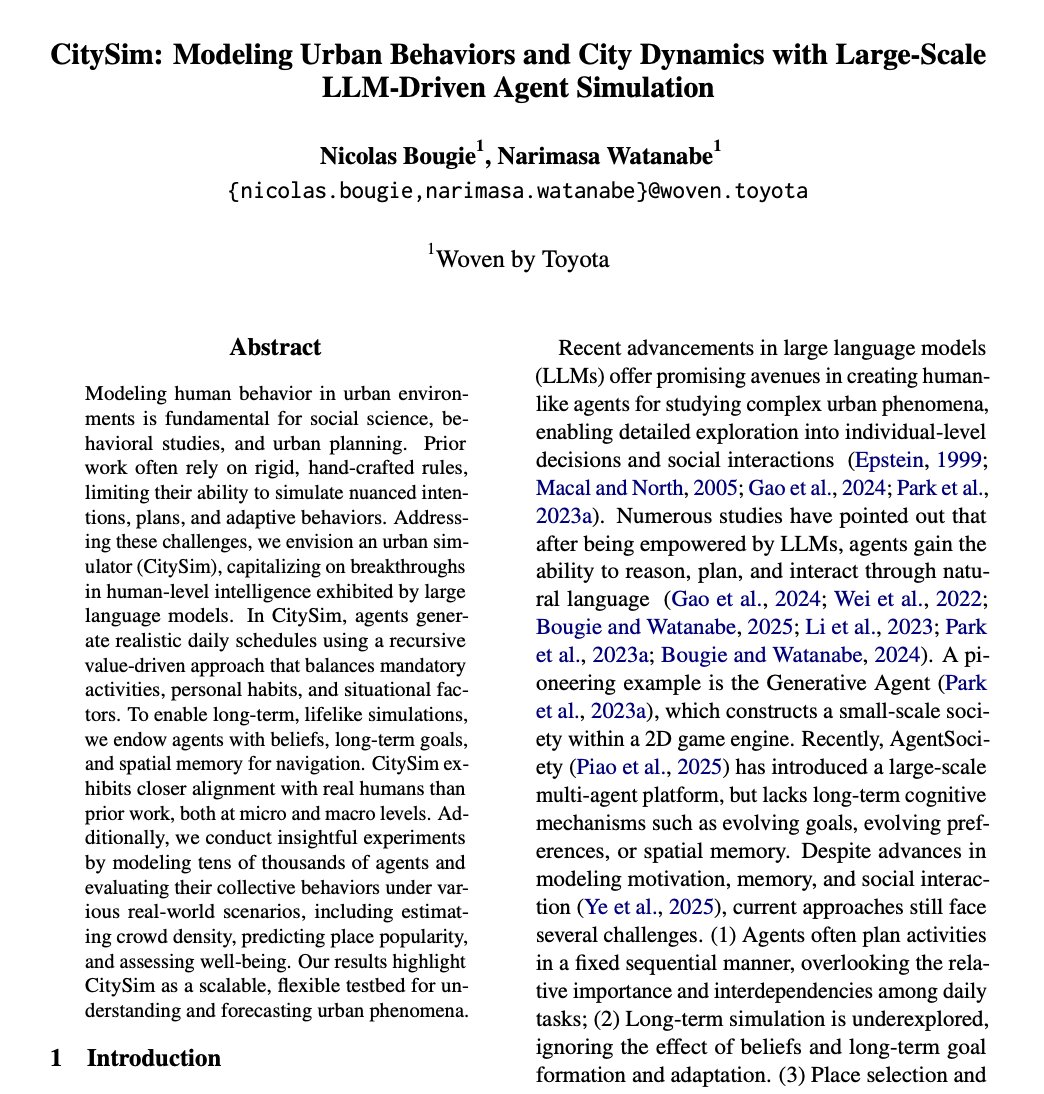
In-depth explainer on AI agents in crypto: how autonomous software gets wallets, onchain identity and payment rails; key use cases in trading, travel and commerce; plus security, compliance and infrastructure shaping the agentic economy.
Arc is Circle’s attempt to turn stablecoin issuance into a complete financial stack: an EVM-compatible chain built around predictable USDC fees, institutional settlement, embedded FX, selective privacy, and eventually decentralized security.
Territories that route into Staking. Search within this inbound mesh or clear the filter to return to the full map.
57 territories · page 1 of 2 · clear inbound routeDon't see your protocol? Request a map →
Curve Finance is DeFi's leading stablecoin DEX, built on the StableSwap invariant. This explainer covers crvUSD, LLAMMA soft liquidations, LlamaLend v2, YieldBasis, veCRV governance, and the protocol's 2026 expansion.
Cap combines reserve-backed cUSD with yield-bearing stcUSD. Approved borrowers access reserve assets against slashable underwriter collateral; this guide covers minting, redemption, liquidation, CAP governance, controls, and risk.
Comprehensive explainer on SOL, the native token of the Solana blockchain, covering technology, tokenomics, DeFi use, derivatives, ETF prospects, risks, and comparisons with BTC, ETH, XRP and USDC for a crypto‑savvy news audience.
Comprehensive explainer on Ether.Fi, covering its liquid restaking tokens, DeFi vaults, OP Mainnet neobank stack, Plume RWA partnership, ETHGas validator deal, card program, and the risks and opportunities of onchain yield.
ETH is Ethereum's native token, serving as gas, staking collateral, and DeFi base asset. This explainer covers supply mechanics, staking yield, ETF developments, whale activity, and long-term outlook.
BNB is Binance's native token powering BNB Chain's DeFi, AI agent, and real-world asset ecosystem. With ~135M circulating supply, quarterly burns exceeding $1B, a pending US spot ETF, and a 20,000 TPS 2026 roadmap, it's a top-5 asset navigating centralization trade-offs.
Crypto yield — earned via staking, lending, stablecoins, or structured strategies — is maturing from token-emission subsidies toward real economic return, with new products, cross-chain infrastructure, and tightening regulation reshaping the landscape in 2025.
Crypto mining explained: how proof-of-work blockchains like Bitcoin secure transactions and mint coins, plus how DeFi liquidity mining works, the economics, regulation, and AI pivot reshaping the industry.
CRV is Curve Finance's governance and incentive token, using vote-escrowed locking, gauge weight voting, and expanding into crvUSD stablecoin and LlamaLend to anchor one of DeFi's largest AMM ecosystems.
In‑depth explainer on Prisma Finance, the LST‑backed stablecoin protocol behind mkUSD and ULTRA. Covers architecture, Curve/Yearn integrations, the 2024 exploit, governance, Resupply transition, and key LSDFi lessons.
NEAR Protocol is a sharded layer-1 blockchain combining cross-chain intent execution ($19B+ volume), AI agent infrastructure, and confidential payments—positioning it at the intersection of DeFi scalability and the emerging AI agent economy.
Deep dive on Kelp DAO’s rsETH token, explaining its restaking design, DeFi use cases, the $292M LayerZero bridge exploit, coordinated recovery with Aave and DeFi United, and how the saga is reshaping cross‑chain and restaking risk models.
Liquity V2 lets users borrow BOLD against ETH, wstETH, or rETH at borrower-set rates. Its immutable core combines branch-specific redemptions and Stability Pools with limited PIL voting and automatic safety states.
BOLD is Liquity V2's decentralized, ETH-backed stablecoin with user-set borrowing rates. Learn how it works, how it earns 7-10% yield via stability pools and yBOLD, its A- rating, risks, and market position.
Explainer on crypto restaking: how staked ETH is reused to secure new protocols, the roles of EigenLayer, Symbiotic and LRTs, yield and shared-security upside, plus leverage, bridge and slashing risks and the cautious but growing institutional adoption.
Bitget is a top-ten crypto exchange known for copy-trading, a 90M-user self-custodial wallet, and an aggressive push into tokenized stocks, pre-IPO assets, and AI-driven trading tools.
Avalanche (AVAX) is a Layer-1 blockchain combining sub-second finality, EVM compatibility, and customizable L1s, increasingly adopted by institutions for tokenized assets, stablecoin payments, and regulated settlement infrastructure.
In-depth explainer on POL, the Polygon ecosystem token replacing MATIC. Covers its role in gas, staking and governance, Polygon 2.0, tokenomics, ZK tech, stablecoin payments (USDC) and onchain finance, plus risks, security incidents and long-term outlook.
Crypto taxes vary sharply by country—from the US treating gains as property income to Japan's landmark 20% flat rate reform and Illinois's controversial 0.2% transaction levy. Here's how the rules work globally.
Deep explainer on stETH, Lido’s liquid staked Ether: how it works, DeFi and ETF integrations, risks, depegs, governance, institutional staking, and why its yield is becoming crypto’s benchmark rate.
In-depth explainer on Anchorage Digital, the first federally chartered U.S. crypto bank, covering its custody and settlement platform, stablecoin issuance for partners like Tether and Ethena, AI-driven “Agentic Banking,” and role in institutional crypto adoption.
BitMine Immersion Technologies (BMNR) is a NYSE‑listed Bitcoin and Ethereum firm that evolved into a major Ethereum treasury, using aggressive ETH accumulation, staking via MAVAN and a 9.5% preferred share to offer public‑market exposure to Ethereum‑backed yield.
A neutral explainer on Cosmos: how IBC, IBC Eureka, EVM support and appchains enable interoperability, plus ATOM inflation reform, USDC standardization, dYdX, security incidents and exchange suspensions.
Comprehensive explainer on crypto rewards covering staking, DeFi yields, USDC savings, exchange loyalty hubs, cards, competitions and quests, with focus on incentives, risks, transparency and how Binance, Coinbase, Kraken and DeFi protocols design yields.
Spark Protocol is MakerDAO's DeFi lending arm, offering USDS borrowing and savings rates. With $3B+ TVL, institutional products like Spark Prime, and a conservative risk record, it's reshaping on-chain credit.
Deep dive on Kelp DAO: how its rsETH liquid restaking token works, what went wrong in the $292M LayerZero bridge exploit, how Aave and Arbitrum-backed coalitions restored backing, and what it means for cross-chain DeFi security.
Kelp is a liquid restaking protocol issuing rsETH on Ethereum. A $292M LayerZero DVN misconfiguration exploit in 2025, linked to North Korea's TraderTraitor, triggered Arbitrum governance relief, mass bridge migrations to Chainlink CCIP, and a 5-week rsETH restoration.
Deep dive explainer on TRX, the native token of Tron, covering its role in stablecoin rails, staking and DeFi, institutional adoption, governance, risks, and how Tron’s low‑cost DPoS network competes with Ethereum in the stablecoin era.
In-depth explainer on yield-bearing crypto assets, covering how stablecoins, bitcoin, gold tokens and tokenized funds generate onchain yield, key mechanisms like RWAs and DeFi lending, and the regulatory and risk trade-offs shaping this new money layer.
EigenLayer is Ethereum’s leading restaking protocol, letting staked ETH and ERC‑20s secure new services like data layers and oracles for extra yield, while raising fresh questions about systemic risk, governance, and shared security across DeFi and AI.
Evergreen deep-dives on the people, protocols, tokens, and ideas behind every headline — from Bitcoin to the newest DeFi mechanism, each written to orient an operator and a newcomer alike.
Each territory connects to the freshest coverage as it breaks. Reader-click data surfaces the stories that actually landed — no black-box algorithm, no engagement bait.
Powered by $SQUID. Contributors submit stories, tip what matters, and refine the territory maps. Top contributors are recognized in the monthly $SQUID drop.