◧ Every topic explained
Evergreen deep-dives on the people, protocols, tokens, and ideas behind every headline — from Bitcoin to the newest DeFi mechanism, each written to orient an operator and a newcomer alike.
Leviathan News / The Atlas
Every topic in crypto, mapped and explained — and wired to the news as it breaks.
📖 New here? Read the launch story →🏆 Atlas Leaderboard →
Deep explainer on crypto apps: how exchange, wallet, DeFi, gaming, AI and “superapps” front-end onchain finance, balance custody and UX, rely on banks and stablecoins, and face growing security and regulatory pressures.

Explains how zero-knowledge cryptography powers privacy, compliance and scaling in crypto, covering proofs, zk-SNARK/STARK trade-offs, stablecoins, proof-of-reserves and major ecosystems like Ethereum, XRP, Solana and Polygon.

In‑depth explainer of DTCC’s role in Wall Street markets and its push into tokenization, Canton, Chainlink, and Stellar, outlining how DTC‑custodied securities and collateral are moving onchain and what it means for crypto and DeFi.
DefiLlama is DeFi's leading open-source analytics aggregator, tracking TVL, fees, stablecoins, and yields across hundreds of chains — expanding in 2026 with LlamaAI, a Python SDK, and private-market data via the Bulletin acquisition.
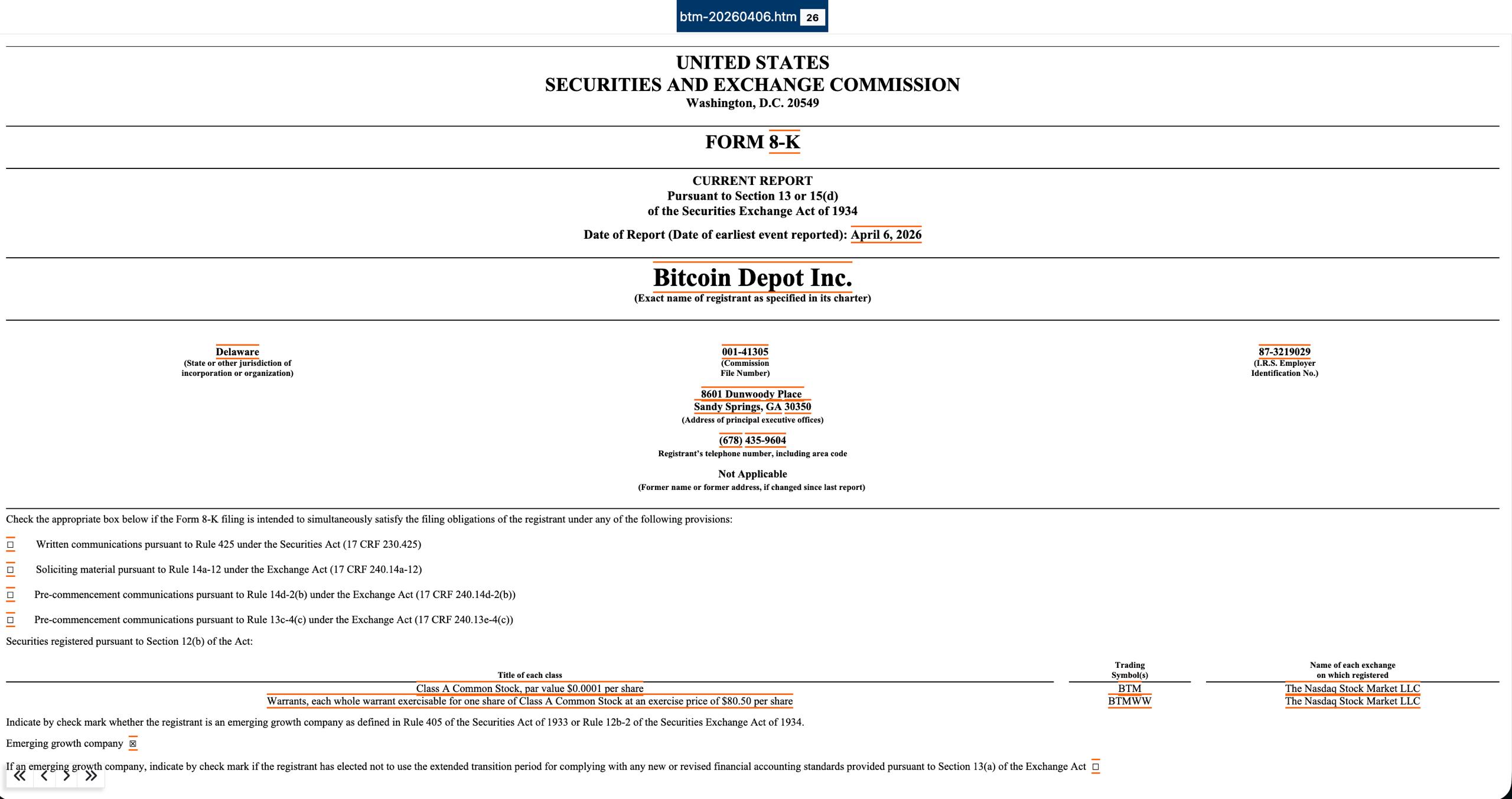
Bitcoin is a decentralized digital asset capped at 21 million coins, now held by ETFs, corporations like Strategy, and sovereign states — navigating record ETF outflows, rising on-chain activity, and growing institutional infrastructure in 2026.
Deep dive explainer on crypto wallets: how keys, custody and wallet types work; DeFi and tokenized asset use; security risks from malware and approvals; and how MPC, account abstraction and AI‑ready wallet infrastructure are reshaping Web3.

In-depth explainer on AI agents in crypto: how autonomous software gets wallets, onchain identity and payment rails; key use cases in trading, travel and commerce; plus security, compliance and infrastructure shaping the agentic economy.

Arc is Circle’s stablecoin‑native L1 built around USDC gas, fast finality, built‑in FX, and post‑quantum security, backed by a $222M ARC token raise and early partners like Aave, Aerodrome, and Visa as it targets institutional onchain payments and capital markets.
Territories that route into Liquidity. Search within this inbound mesh or clear the filter to return to the full map.
94 territories · page 1 of 4 · clear inbound routeDon't see your protocol? Request a map →
XRP is the native token of the XRP Ledger, built for fast cross-border payments. This explainer covers its technology, Ripple's business model, the SEC lawsuit outcome, ETF adoption, AI agent payments push, and how it compares to BTC, ETH, and SOL.
Crypto fees span network gas costs, protocol revenue, DEX trading charges, and bridge tolls. This guide explains how each type works, how they're evolving, and why fee generation is becoming the key metric for evaluating blockchain sustainability.
In‑depth explainer on Sonic, the high‑throughput EVM layer‑1 that succeeds Fantom, covering S tokenomics, USSD stablecoin design, DeFi and Aave integrations, vertical integration, governance shifts, risks, and regulatory context.
Explainer on “BUILD” in crypto: how it evolved from meme to operating system for BTC, DeFi, stablecoins and AI agents, why ownership and tokenization matter, and how infra like Base, Arch and UAE rails signal the ecosystem’s long-term direction.
Deep explainer on what “launch” means in crypto, covering mainnets, tokens, stablecoins, AI agents, ETFs, RWAs and payment rails, plus lifecycle, strategies, risks and regulation shaping onchain markets.
Aave is DeFi's largest lending protocol, enabling permissionless overcollateralized borrowing via smart contracts. V4's hub-and-spoke design, GHO stablecoin, AAVE buybacks, and the Horizon institutional market define its 2026 strategy.
Crypto yield — earned via staking, lending, stablecoins, or structured strategies — is maturing from token-emission subsidies toward real economic return, with new products, cross-chain infrastructure, and tightening regulation reshaping the landscape in 2025.
Yearn is a DeFi yield aggregator that automates capital allocation across lending and liquidity protocols through smart contract Vaults. Since creating the first DeFi Vault in 2020, it has grown into one of DeFi's most battle-tested yield infrastructures, with over $8B in deposits and more than $300M in net profits.
Prediction markets let traders buy contracts tied to future outcomes, functioning as real-money probability aggregators. From Polymarket's election boom to Schwab's S&P 500 wagers, the sector is exploding—amid regulatory battles over sports betting, CFTC jurisdiction, and oracle infrastructure gaps.
In-depth explainer on LayerZero, the omnichain messaging protocol behind OFT tokens and cross-chain DeFi, covering ZRO governance, DVN-based security, the $292M KelpDAO rsETH exploit, migrations to Chainlink CCIP, and the protocol’s evolving outlook.
Morpho is a modular DeFi lending protocol with $11B+ in deposits, a $175M raise from Paradigm and a16z, and integrations with Coinbase, enabling isolated credit markets and curated yield vaults for institutional and retail users.
Deep explainer on crypto lending, covering DeFi protocols like Aave, Morpho and Curve, the role of USDC and stablecoins, risk and liquidation mechanics, institutional adoption, and how onchain credit differs from traditional loans.
In-depth explainer on crypto bridges: how they connect blockchains, power cross-chain DeFi and stablecoin flows, why they’re so often hacked, key case studies, UX trends, and what safer, proof-based interoperability could look like.
Hyperliquid is a fully on-chain perpetual futures DEX running its own high-speed L1, with $10B+ open interest, HYPE token buybacks, pre-IPO equity markets, and growing regulatory engagement in the US.
crvUSD is Curve Finance's crypto-collateralized stablecoin using the LLAMMA soft-liquidation AMM, PegKeepers, scrvUSD savings yield, LlamaLend, and FastBridge to build a full-stack DeFi credit layer on Ethereum and L2s.
Protocol revenue has become crypto's defining credibility metric — from Solana's $68M monthly fees to Aave's $60M annual projection, this guide explains how onchain cash flows are valued, distributed via buybacks and burns, and why they now drive capital allocation.
In‑depth explainer on Yield Basis, Curve’s BTC‑ and ETH‑focused IL‑free liquidity protocol. Covers FXSwap design, crvUSD credit lines, YB tokenomics, Hybrid Vaults, risks, and how it compares to Uniswap v3 and other DeFi yield strategies.
In-depth explainer on funding in crypto, covering venture raises, Ethereum dev financing, stablecoin yields, funding rates, onchain repo, quadratic funding, MEV, AI capital flows, and how these mechanisms shape risk, incentives, and market structure.
Uniswap is the leading decentralized exchange protocol, powering AMM-based token swaps on Ethereum and 18+ chains. This explainer covers how it works, UNI governance, Unichain L2, RWA adoption, SEC scrutiny, and the fee switch debate.
Deep explainer on Bitfinex’s history, products, 2016 hack, legal track record, ties to Tether’s USDT and new L1s, and its evolving role in Bitcoin, stablecoin and crypto markets, with context on RRT, LEO, XAUT and regulatory outlook.
In-depth explainer on crypto volatility, covering Bitcoin and Ethereum cycles, realized vs implied volatility, CME’s new Bitcoin Volatility futures, DeFi and AI token risks, and how traders and institutions measure, trade, and manage crypto market swings.
In-depth explainer on Balancer, covering its AMM design, LBPs, V3 hooks, DAO governance, 2025 exploit, Balancer Labs shutdown, security lessons, tokenomics debates and outlook as a post-hack, DAO-led DeFi liquidity primitive.
Comprehensive explainer on memecoins: what they are, how they launch and trade (esp. on Solana and Pump.fun), celebrity and political tokens like TRUMP, legal risks, market structure, and how these volatile assets fit alongside Bitcoin, ETH and stablecoins.
Explainer on crypto delisting: how and why exchanges remove tokens, impacts on liquidity and pricing, differences from stock delistings, effects on USDT pairs, WBTC and stablecoins, legal and EU angles, and how traders can navigate and manage delisting risk.
Fluid is a unified DeFi liquidity layer combining lending, high‑LTV vaults, and a capital‑efficient DEX, now central to stablecoin and institutional markets but tested by exploits, bad debt, and systemic risk across onchain finance.
Liquidity incentives are the token rewards, fee shares, and bribes DeFi protocols pay to attract capital. Learn how emissions, veCRV gauges, vote markets, and liquidation bonuses work—and why sustainability matters.
In crypto, “pools” aggregate capital, hashpower, or rewards into shared structures that power DEX liquidity, lending, staking, mining, stablecoin FX and incentives. This explainer maps key pool types, risks, designs and their role in onchain markets.
Explains what “update” means across crypto, from protocol releases and leadership shifts to liquidity fixes and regulatory moves, with examples from Bitcoin, Ethereum, exchanges, DeFi and AI, and guidance on reading these updates as a user or investor.
In-depth explainer on crypto market cap: how it’s calculated, what circulating cap and FDV mean, the role in rankings, stablecoins, RWAs and indices, plus the metric’s limits and how traders, builders and institutions use it.
Deep dive into FRAX and Frax Finance: how frxUSD, Fraxtal, and the FRAX token form a compliant, fully collateralized stablecoin “operating system” at the intersection of DeFi, regulation, and institutional adoption.
Evergreen deep-dives on the people, protocols, tokens, and ideas behind every headline — from Bitcoin to the newest DeFi mechanism, each written to orient an operator and a newcomer alike.
Each territory connects to the freshest coverage as it breaks. Reader-click data surfaces the stories that actually landed — no black-box algorithm, no engagement bait.
Powered by $SQUID. Contributors submit stories, tip what matters, and refine the territory maps. Top contributors are recognized in the monthly $SQUID drop.